0
0

Presented by



A practical guide to lining up confident and ready at one of Canada’s most demanding trail races
By Myriam Lefebvre
Preparing for the 135-kilometre Quebec Mega Trail is a challenge that commands respect. For many runners, the sheer distance, elevation and technical terrain can feel overwhelming at first glance. Yet for athletes willing to commit to consistent, well-structured training, the QMT-135 is far from unattainable.
To better understand what it takes to arrive prepared on race day, we spoke with a mix of elite coaches and experienced amateur runners: Anne Champagne, coach at Tout.trail and holder of the women’s record at the QMT 100-mile; David Jeker, elite athlete and coach at Quantum Endurance; as well as QMT finishers Catherine Cormier-Boutin and Dawson Mossman. Their insights shed light on how to train, fuel and approach this iconic ultramarathon—along with lessons they’ve learned along the way.
Anne Champagne is clear: the QMT-135 demands respect and patience. Fresh off a podium finish at the Diagonale des Fous, she emphasizes that long-term progression is essential. “This race requires time—time to prepare your body and mind for the workload,” she explains. “You want to arrive strong, resilient and ready to manage fatigue over many hours.”
That said, Champagne believes the race is accessible even to runners with limited ultra experience, provided they approach it with discipline and humility. “You have to accept that the goal might be learning and finishing, not racing for a result,” she says.
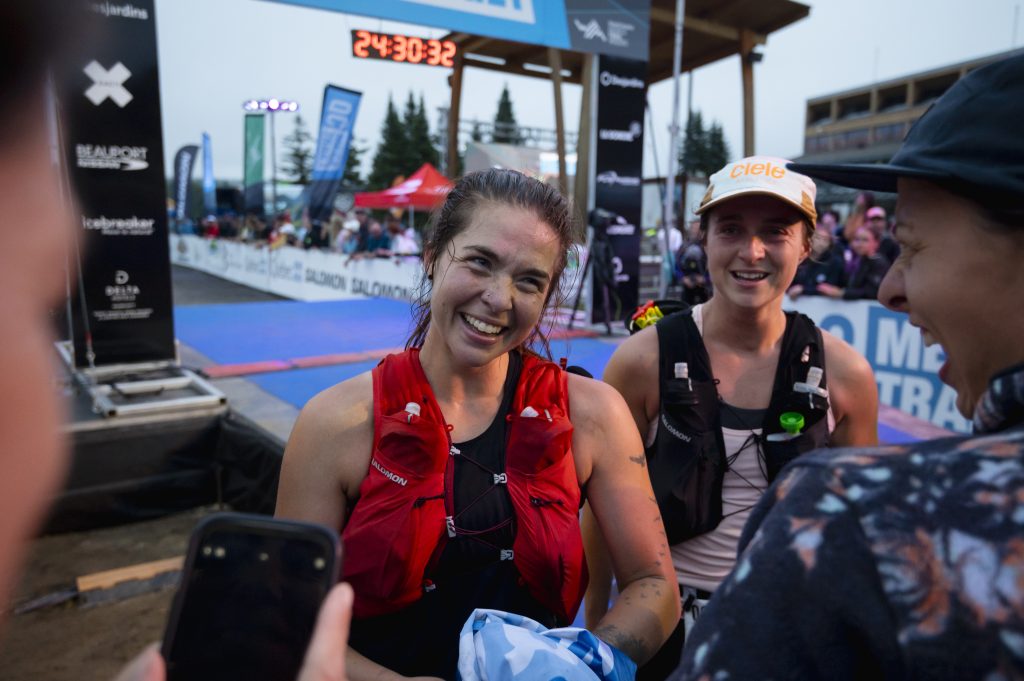
Anne Champagne after her victory in the QMT-100 mile in 2024. Photo: Laurence Gaudy
David Jeker echoes this sentiment, stressing the importance of knowing yourself. Training history, injury background and weekly consistency all matter. “Some runners can safely make a bigger jump in distance if they’re willing to manage the race conservatively,” he notes. “There’s no universal path.”
Learn more about the QMT-135 and register here.
While there is no single formula for QMT-135 success, all agree that preparation must be deliberate and substantial. Jeker explains that ultra training doesn’t necessarily require extreme long runs. “In my case, my longest run before the race was around 50 kilometres,” he says, noting that injury management played a role in shaping his approach.
Instead, he focused on accumulating volume—around 140 kilometres per week—through a mix of running, elevation work, cycling and strength training. Tune-up races can help, but they’re optional. “If you do race beforehand, keep it controlled so recovery doesn’t derail your build.”
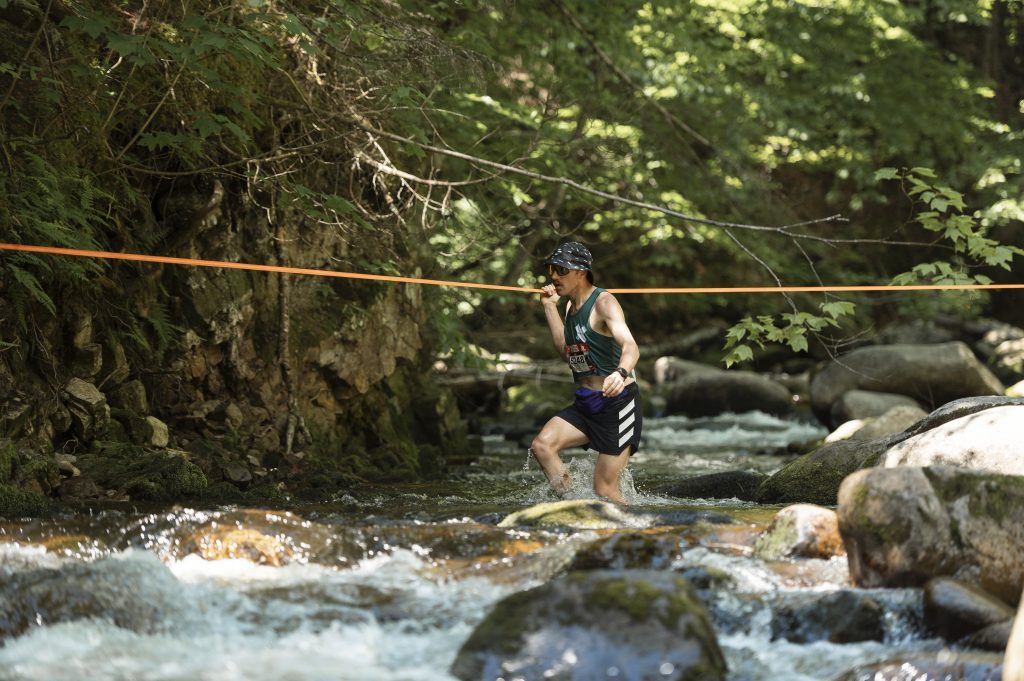
Jeker at QMT. Photo: Daniel Thibault
One training strategy Jeker values highly is back-to-back long days. “A long run on Saturday, followed by a shorter but more dynamic run on tired legs Sunday, especially with descents,” he explains. Strength training also plays a central role in delaying fatigue late in the race.
Another often-overlooked component? Hiking. “Everyone hikes the climbs at Mont-Sainte-Anne—even elite runners,” Jeker says. “If you never practise hiking, you’re missing a key skill for this course.”
Learn more about the QMT-135 and register here.
For amateur runners, training for the QMT-135 can be equally immersive. Catherine Cormier-Boutin, a kindergarten teacher based in Quebec City, averages roughly 175 kilometres per week. Her transition to longer ultras meant prioritizing elevation over flat mileage. “Instead of a long road run, I’d spend hours climbing at Mont-Sainte-Anne,” she explains. On occasion, she even planned solo overnight outings to simulate running through the night.
She also integrates training seamlessly into her daily routine—running to work, running errands and making movement a natural part of life.
Dawson Mossman, an experienced ultrarunner from New Brunswick, takes a slightly different approach rooted in intuition and enjoyment. With nearly ten years of ultra experience, including distances up to 300 kilometres, his priority is consistency. His personal benchmark: two consecutive weeks where his weekly mileage matches or exceeds race distance. “If I can do that and still feel strong, I know I’m ready,” he says.
Above all, Mossman emphasizes recovery. “Listening to your body matters more than sticking blindly to a plan. Taking a day off won’t ruin months of training.”
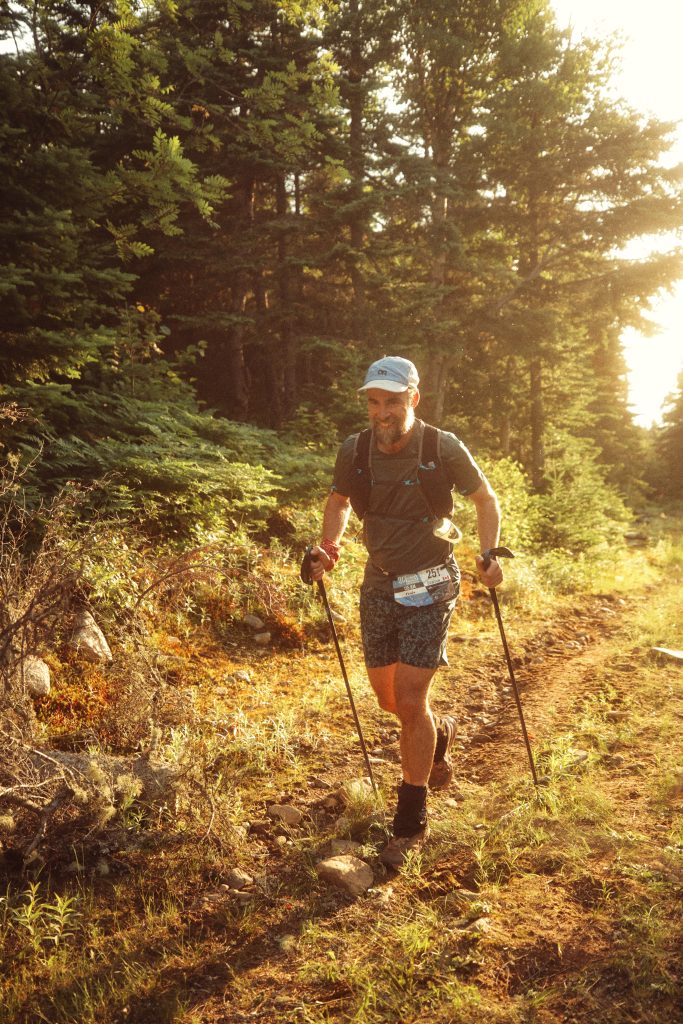
Dawson Mossman at 2025 QMT-135. Photo: Laurence Gaudy
Nutrition plays a decisive role in QMT-135 preparation, both physically and mentally. Jeker highlights its cognitive impact. “If your brain is fueled properly, your mindset stays positive,” he says. “If not, things can unravel quickly.”
Champagne stresses the importance of testing nutrition during training—not just quantities, but textures and digestibility. “You need real-world practice, not just a plan on paper,” she explains.
For Cormier-Boutin, mindset is closely tied to enjoyment. “I’m not racing to win, so I focus on having fun,” she says. Conversations with other runners, breathtaking views, the energy at aid stations and the quality of the QMT organization all contribute to her experience.
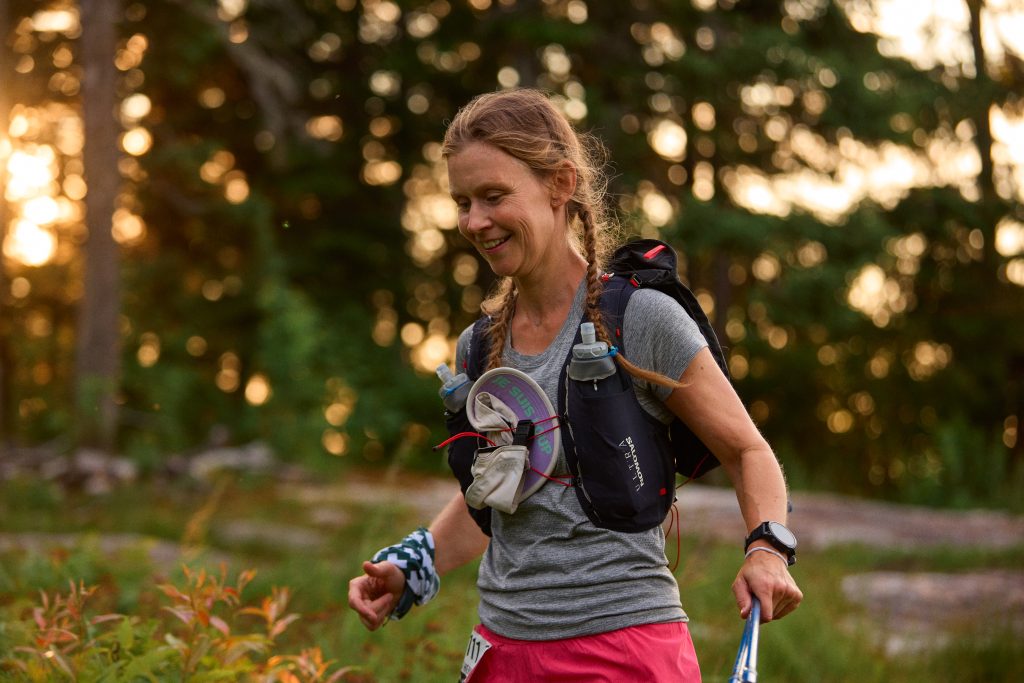
Catherine Cormier-Boutin at 2025 QMT-135. Photo: Laurence Gaudy
Mossman shares that philosophy and favours simple, real foods on the trail—banana bread, wraps, eggs—and fondly recalls a frozen strawberry-banana smoothie his crew surprised him with during the race. Moments like these, he says, are what stay with you long after the finish.
The takeaway from all four athletes is clear: the QMT-135 is not just a race, but an experience. “Take time to thank the volunteers, appreciate the support and remember that being able to run a race like this is a privilege,” Mossman says. Each edition of the QMT-135 is an opportunity to challenge yourself—and to savour the journey.
Learn more about the QMT-135 and register here.